Medicinal Herbs to Grow at Home: A Practical Guide
A calm guide to growing chamomile, peppermint, lemon balm, calendula, echinacea, sage, thyme and ginger at home, with traditional uses, evidence and safety.
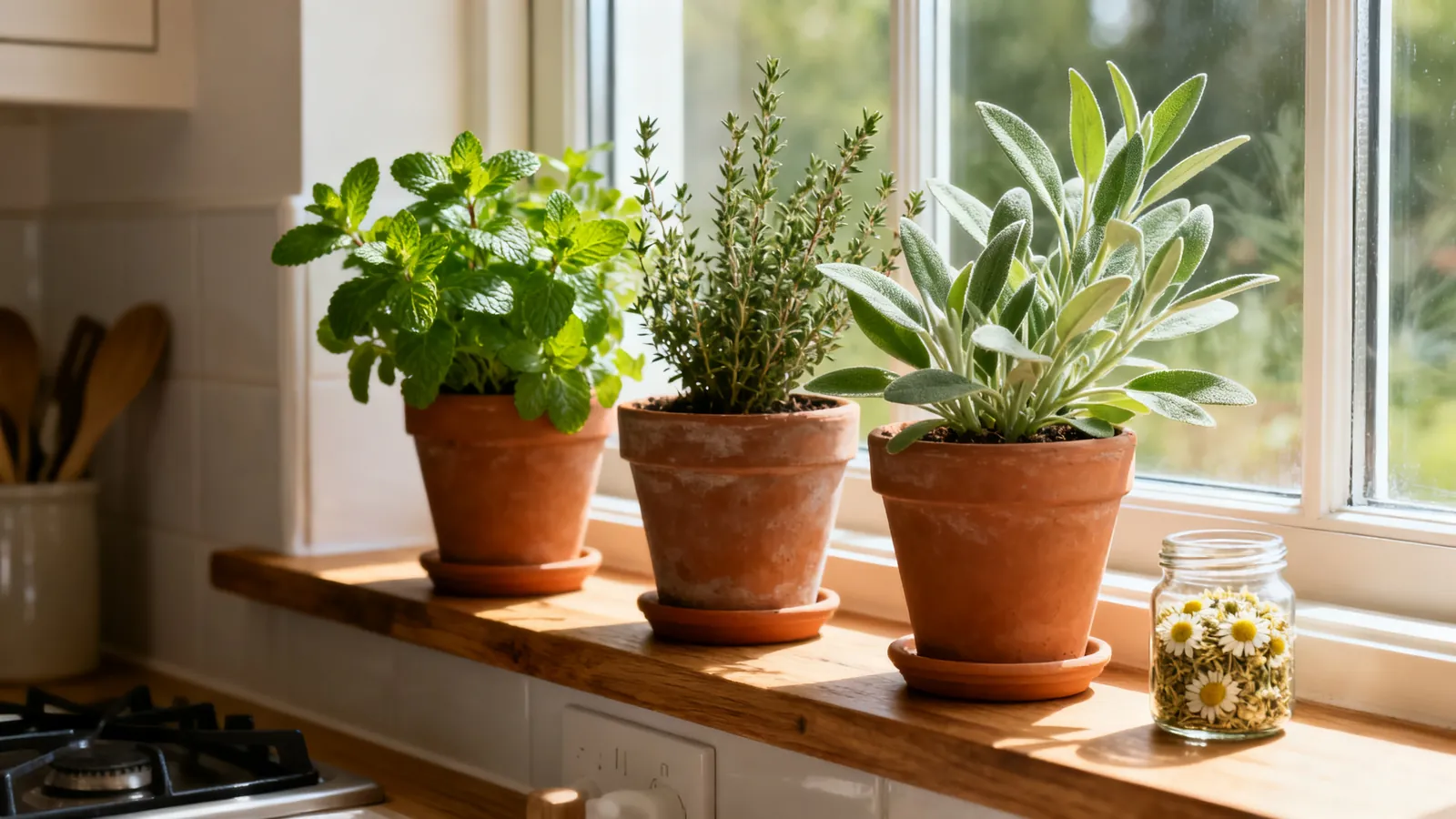
A windowsill, a balcony or a few square metres of garden can hold a small pharmacy of familiar plants. Chamomile, peppermint, lemon balm, calendula, echinacea, sage, thyme and ginger all grow well in containers, and each has a long history of household use as a tea, a gargle, a poultice or a kitchen seasoning. What follows is what each plant is, how it is traditionally prepared, what modern research has actually looked at, and where the cautions sit. It is a reference for growing and using herbs, not a reason to replace medical care.
What the research shows, and how strong it is
Herbal medicine sits on a spectrum. Some plants have been studied in small human trials; others rest mostly on laboratory work and centuries of traditional use. None of the herbs below is a treatment for a disease, and none should be used to replace prescribed medicine.
Chamomile (Matricaria chamomilla) has been studied for mild digestive discomfort and for restlessness before sleep. Reviews of the research describe small trials with mixed quality; the evidence is modest, and most studies use standardised extracts rather than home-grown flowers. A cup of chamomile tea is a gentle, well-tolerated ritual, but it is not a treatment for insomnia or an anxiety disorder.
Peppermint (Mentha × piperita) has the strongest evidence of the group for digestive complaints. Enteric-coated peppermint oil capsules have been studied for irritable bowel symptoms, with several small trials suggesting benefit for cramping and bloating. Peppermint tea itself has not been studied to the same standard, and the tea is a comfort measure rather than a therapy.
Lemon balm (Melissa officinalis) has been examined in small trials for restlessness, low mood and sleep quality, often in combination with other herbs. The results are inconsistent, and the studies are small. Traditional use as a calming evening tea is reasonable; claims that it lifts depression are not supported.
Calendula (Calendula officinalis) has been studied mainly as a topical preparation for minor skin irritation and slow-healing grazes. Several small trials suggest it may help soothe minor wounds and dermatitis, but the evidence is limited and the studies vary in preparation. It is not a treatment for infection or skin disease.
Echinacea (Echinacea purpurea, E. angustifolia) has been studied for the common cold, with results that are genuinely mixed. Some trials suggest a modest shortening of cold symptoms when taken early; others show no difference. Reviews conclude the evidence is inconsistent. It is not a treatment for infection and does not replace medical care for a serious illness.
Sage (Salvia officinalis) has been studied as a gargle for sore throat and for menopausal hot flushes, with small trials showing possible benefit. The evidence is preliminary. Sage is also a culinary herb, and kitchen amounts are not the same as concentrated extracts.
Thyme (Thymus vulgaris) contains thymol, which laboratory studies show has antimicrobial activity. Human trials are few, and most traditional use is as a gargle or a steam inhalation for a stuffy nose. Laboratory findings do not translate directly into a treatment.
Ginger (Zingiber officinale) has the most consistent evidence of the group. Reviews of small trials suggest it may help with nausea, including motion sickness and nausea in pregnancy, at doses commonly studied of around 1 g a day. It is not a treatment for a digestive disease, and it does not replace anti-nausea medication prescribed for a medical condition.
Growing each herb at home
Most of these plants are undemanding. The main variables are light, drainage and water.
Chamomile is grown from seed, sown directly in spring. It prefers full sun and light, well-drained soil. It self-seeds readily, so a patch tends to return each year. Harvest the flowers when fully open and dry them in a warm, airy, dark place.
Peppermint is grown from a cutting or a root division rather than seed. It spreads aggressively by runners, so it belongs in a pot, even in the ground. Partial shade suits it. Cut stems before flowering for the strongest leaf.
Lemon balm is also a spreader and is best kept in a container. It tolerates partial shade and needs regular cutting to stay leafy. Harvest leaves through the growing season and dry or freeze them.
Calendula is sown from seed in spring or autumn. It wants sun and average soil. Pick the flower heads on a dry morning and dry them whole.
Echinacea is a hardy perennial grown from seed or a plant. It needs sun and a well-drained spot, and it takes a season or two to establish. The root and the aerial parts are both used traditionally; roots are lifted in autumn.
Sage is a woody perennial that prefers full sun and poor, well-drained soil. It dislikes wet feet. Harvest sprigs through the year, and prune after flowering to keep it from going leggy.
Thyme is a low-growing perennial that wants sun, grit and sharp drainage. It is happier dry than wet. Snip stems as needed; the flavour is strongest before flowering.
Ginger is grown from a plump rhizome with visible eyes, planted in a pot in rich, free-draining compost. It needs warmth, humidity and indirect light, and it takes several months to produce a usable rhizome. In cool climates it is a houseplant for most of the year.
How these herbs are used: teas, infusions and kitchen amounts
Traditional preparation is simple, and the amounts below are the ones commonly described in household use and in the small studies that exist.
Tea or infusion. A standard cup uses 1–2 teaspoons of dried herb or a small handful of fresh leaves in 200–250 ml of freshly boiled water, steeped covered for 5–10 minutes. Chamomile, peppermint, lemon balm, sage and thyme are all prepared this way. Covering the cup keeps the volatile oils in.
Gargle. Sage and thyme are traditionally used as a cooled, strong infusion for gargling. A common household measure is 1–2 teaspoons of dried leaf per cup, steeped 10 minutes, then cooled. It is a comfort measure for a sore throat, not a treatment for infection.
Steam inhalation. Thyme or peppermint in a bowl of hot water, with a towel over the head, is a traditional way to ease a stuffy nose. It carries a real risk of scalding, so it is not suitable for children and should be done carefully.
Topical use. Calendula is traditionally infused in oil or made into a salve for minor grazes and dry skin. Only use preparations made for skin, and patch-test first.
Ginger. In cooking, ginger is used freely. In the studies on nausea, doses commonly used are around 1 g a day of dried ginger, often divided into smaller amounts. Do not exceed what a label or a clinician advises.
Echinacea. Trials have commonly used standardised extracts, often several hundred milligrams a day, taken at the first sign of a cold. Home-made tinctures are not standardised, so the amount of active compound is unknown.
Side effects, interactions and who should avoid these herbs
Herbs are not automatically gentle because they are plants. The following cautions are the ones that matter most.
Chamomile. Avoid if allergic to plants in the daisy family (ragweed, marigold, chrysanthemum). It may interact with warfarin and other blood-thinning medicines. Large amounts are not recommended in pregnancy.
Peppermint. Peppermint oil capsules should not be taken by people with reflux or a hiatus hernia, as they can worsen heartburn. Peppermint may reduce stomach acid and can interact with antacids and acid-reducing medicines. Avoid giving peppermint oil to young children, and keep it away from the face of infants.
Lemon balm. Generally well tolerated. It may interact with thyroid medicines and with sedatives, and it should be used cautiously alongside prescribed sedatives or thyroid medication.
Calendula. For topical use, patch-test first. Avoid on deep or infected wounds, and do not take internally in pregnancy.
Echinacea. Avoid in autoimmune conditions and in people taking immunosuppressant medicines, because it may stimulate the immune system. It may interact with some medicines processed by the liver. It is not recommended in pregnancy or breastfeeding without medical advice. Avoid if allergic to daisy-family plants.
Sage. Culinary amounts are fine. Concentrated sage extracts and sage tea in large amounts are not recommended in pregnancy, as sage contains thujone, and it may interact with anticonvulsants and diabetes medicines. Avoid medicinal doses if breastfeeding, as it may reduce milk supply.
Thyme. Culinary use is safe. Thyme oil should not be taken internally and should not be applied undiluted to skin. Medicinal doses in pregnancy and in children should be discussed with a clinician.
Ginger. In amounts commonly used, ginger is well tolerated. It may interact with warfarin and other blood thinners, and with diabetes medicines. High doses may cause heartburn. People with gallstones should seek advice before taking medicinal amounts.
General rules. Anyone who takes prescription medicine, is pregnant or breastfeeding, has a medical condition, or is preparing for surgery should talk to a doctor or pharmacist before starting any herb. Do not stop or change prescribed medication without the prescriber. Children should not be given medicinal herbs without professional advice. Positive identification matters: grow from labelled seed or plants, and never harvest a wild plant unless it has been identified with certainty. Some plants have toxic lookalikes.
Common mistakes, myths and what these herbs cannot do
Myth: a strong tea is a stronger medicine. More herb does not mean more benefit, and it increases the chance of side effects. Stick to the amounts commonly used.
Myth: home-grown means safe. Potency varies from plant to plant and season to season, so a home-made preparation is unpredictable. Commercial products are standardised for a reason.
Myth: herbs can replace prescribed medicine. They cannot. Chamomile does not treat an anxiety disorder, peppermint does not treat irritable bowel disease, echinacea does not treat an infection, and ginger does not replace prescribed anti-nausea medicine. These plants may support comfort and routine, and that is the honest limit of the evidence.
Mistake: ignoring interactions. Blood thinners, thyroid medicines, sedatives, anticonvulsants, diabetes medicines and immunosuppressants are the groups most often involved. Tell a pharmacist about every herb being taken.
Mistake: harvesting without identifying. Wrong identification is the most serious risk in home herbalism. Grow from known seed, label the pots, and do not guess.
Mistake: giving herbs to children. Children are not small adults. Peppermint oil, sage in medicinal amounts and concentrated thyme preparations are not for young children.
Comparing the eight herbs at a glance
| Herb | How to grow | Traditional use | Main caution | Who it does not suit |
|---|---|---|---|---|
| Chamomile | Seed, sun, well-drained | Evening tea, digestive comfort | Daisy-family allergy, blood thinners | Ragweed allergy, pregnancy in large amounts |
| Peppermint | Cutting or division, pot, partial shade | Tea for bloating and cramping | Reflux, antacids | Reflux, hiatus hernia, infants |
| Lemon balm | Cutting or division, pot, partial shade | Calming evening tea | Thyroid and sedative medicines | Thyroid medication users without advice |
| Calendula | Seed, sun, average soil | Salve for minor grazes | Patch-test, no internal use in pregnancy | Deep or infected wounds |
| Echinacea | Seed or plant, sun, well-drained | Early cold-season tea or extract | Autoimmune conditions, immunosuppressants | Autoimmune disease, pregnancy |
| Sage | Perennial, sun, poor soil | Gargle, culinary use | Thujone in pregnancy, milk supply | Pregnancy, breastfeeding, epilepsy medicines |
| Thyme | Perennial, sun, grit | Gargle, steam inhalation | Thyme oil not internal | Children, pregnancy in medicinal doses |
| Ginger | Rhizome in a pot, warmth | Nausea, cooking | Blood thinners, gallstones | Gallstones, blood-thinner users without advice |
Growing a few herbs at home is a modest, pleasant thing. The plants are easy, the teas are cheap, and the ritual of a cup in the evening has value on its own. What they are not is a substitute for diagnosis, prescription medicine or a conversation with a clinician. Grow them, use them within the amounts commonly described, and keep the safety rules in view.
Common questions
Which medicinal herbs are easiest to grow at home?
Peppermint, lemon balm, thyme and sage are the most forgiving. All four tolerate containers, need modest water and regrow after cutting. Chamomile and calendula are easy from seed in a sunny spot. Ginger needs warmth and patience, and echinacea takes a season or two to establish.
How do you make a herbal tea from fresh leaves?
Use a small handful of fresh leaves or 1–2 teaspoons of dried herb in a cup of freshly boiled water. Cover the cup and steep for 5–10 minutes, then strain. Covering keeps the volatile oils in the steam rather than letting them escape.
Are home-grown herbs safer than shop-bought ones?
Not automatically. Home-grown plants vary in potency from season to season, and misidentification is a real risk if plants are not grown from labelled seed. Shop-bought products are usually standardised, which makes the amount of active compound more predictable.
Can you take medicinal herbs with prescription medicine?
Some can, some cannot. Chamomile and ginger may interact with blood thinners, lemon balm with thyroid medicines and sedatives, and echinacea with immunosuppressants. A pharmacist can check a full list, and no prescribed medicine should be stopped or changed without the prescriber.
Which herbs should be avoided in pregnancy?
Sage in medicinal amounts and concentrated sage extracts are avoided in pregnancy because of thujone, and it may reduce milk supply while breastfeeding. Echinacea and medicinal doses of thyme are also not recommended without medical advice. Chamomile in large amounts is best avoided. Ask a midwife or doctor before using any herb.
Read next
Berberine: What It Is, Benefits and How to Take It
Berberine is a yellow plant compound studied for blood sugar and cholesterol. Learn what the research shows, common doses, interactions and who should avoid it.
Berberine Side Effects, Interactions and Safety
Berberine is a yellow plant compound studied for blood sugar. Learn its common stomach side effects, drug interactions, and who should avoid it.
Berberine for Weight Loss: What the Research Shows
Berberine is a yellow plant alkaloid sold for weight loss. Here is what trials measured, how it is used, and who should avoid it.