Spirulina: Blue-Green Algae, Benefits and Safety
Spirulina is a blue-green algae used as a protein-rich powder. Learn what it contains, what research suggests, contamination risks and who should avoid it.
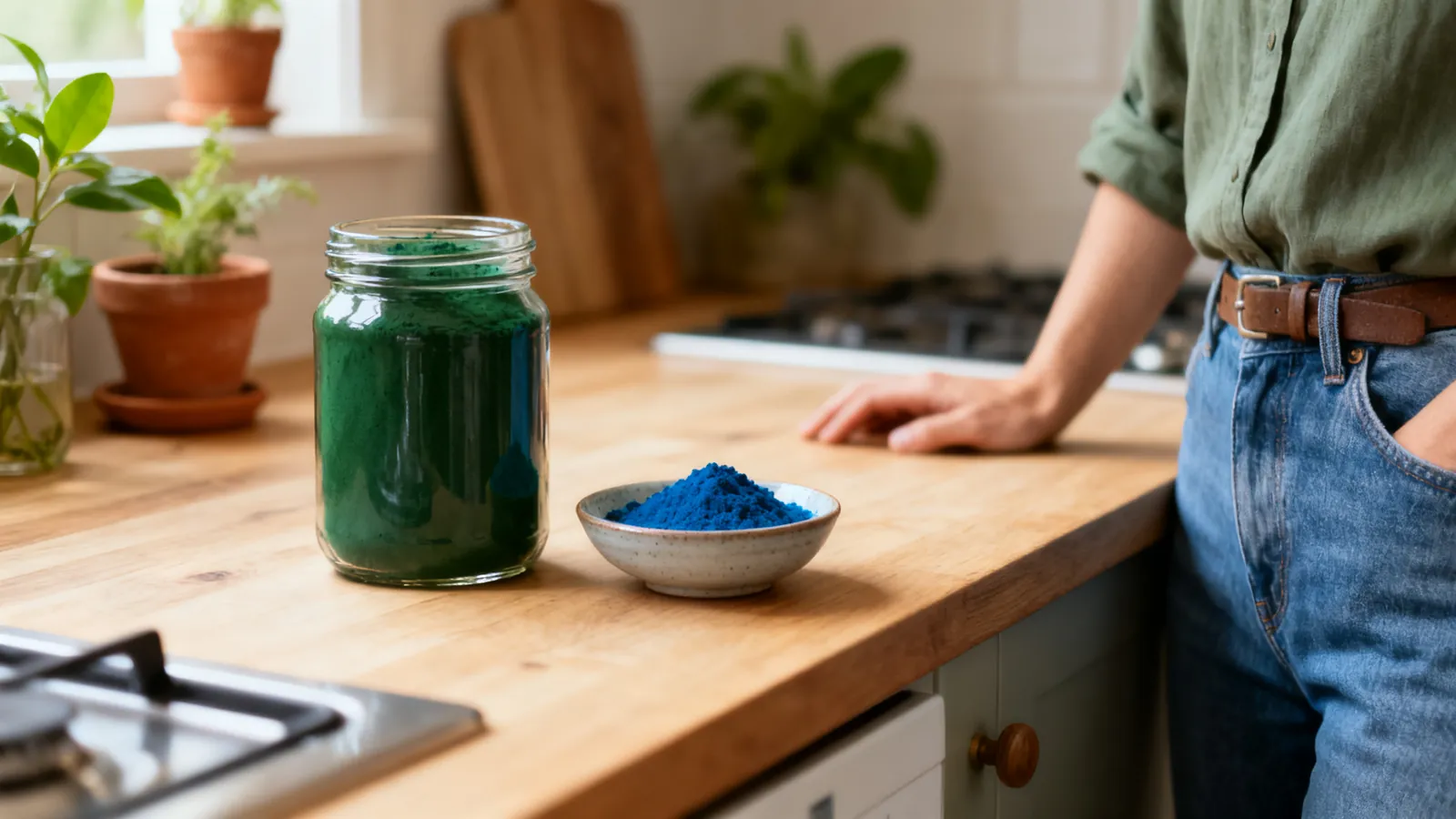
Spirulina is a blue-green algae, a type of cyanobacteria, that has been eaten for centuries and is now sold as a deep green powder, tablet or capsule. It grows naturally in warm, alkaline lakes and is farmed in shallow ponds, then dried and ground. The colour comes from a mix of pigments, including chlorophyll and a blue pigment called phycocyanin. Because it is a whole organism rather than an extract, spirulina powder carries protein, vitamins, minerals and pigments together. It is often added to smoothies, juices and energy balls for colour and nutrition, and it is one of the most widely studied algae in the supplement market.
What is actually in spirulina
Spirulina is roughly half protein by weight when dried, which is high for a plant food. That protein is complete, meaning it supplies all the essential amino acids the body cannot make. It also contains B vitamins, iron, magnesium, potassium and small amounts of essential fatty acids. The blue pigment phycocyanin is a protein-pigment complex that gives blue spirulina its colour and is the subject of much of the laboratory research. Blue spirulina is not a different species; it is a phycocyanin-rich extract made from the same algae, usually sold as a bright blue powder for colouring foods and drinks.
Cyanobacteria like spirulina can produce toxins called microcystins, and they can take up heavy metals such as lead, mercury and arsenic from the water they grow in. This is why the source and testing of any spirulina product matter more than the marketing on the label. Reputable producers test for microcystins and heavy metals and publish the results.
What the research suggests
Studies on spirulina have looked at cholesterol levels, blood sugar, blood pressure, exercise performance and antioxidant status. Some small trials and reviews report modest improvements in total cholesterol and LDL cholesterol, and some suggest a small effect on fasting blood sugar. Other trials have looked at blood pressure and found small reductions in some people. The evidence is strongest for cholesterol and blood sugar, but it is still limited: many studies are small, short and use different doses and preparations, so results are not consistent. There is no strong evidence that spirulina prevents or treats any disease.
For exercise, a few small trials suggest spirulina may help with endurance or reduce exercise-induced oxidative stress, but the findings are mixed and not enough to recommend it as a performance aid. For immune function, laboratory studies show phycocyanin has antioxidant and anti-inflammatory activity, but human trials are few and short. Overall, the research is interesting but preliminary. Spirulina is a nutritious food, not a medicine.
How to use spirulina: forms, amounts and timing
Spirulina is sold as a powder, tablet, capsule and flake. Powder is the most versatile: it can be stirred into water, juice, smoothies, yogurt or soup. Tablets and capsules are convenient but often contain fillers and binders, so check the label. Blue spirulina powder is used mainly as a natural blue colouring for drinks, icings and desserts; it has less protein than green spirulina because it is an extract.
Common amounts used in research and on standard labels range from 1 to 3 grams a day, though some studies have used up to 8 grams a day. A typical serving is 1 teaspoon (about 2-3 grams). Start with a small amount, such as half a teaspoon, to see how it sits with you. Spirulina can be taken with or without food. Some people take it before exercise or with breakfast. There is no standard timing that research supports; consistency matters more than the clock.
When buying, look for a product that states the species (usually Arthrospira platensis), the country of origin and a certificate of analysis for microcystins and heavy metals. Organic certification is a plus but not a guarantee of low toxins. Avoid products that make disease claims or list proprietary blends without amounts.
Side effects, interactions and who should avoid spirulina
Spirulina is generally well tolerated. Some people experience digestive upset, nausea, headache or allergic reactions, especially if they are sensitive to algae or have a seafood allergy. Because spirulina can contain iodine, it may affect thyroid function in people with thyroid conditions; talk to a doctor before using it if you have thyroid disease. It may also interact with immunosuppressant drugs, blood thinners and drugs for blood sugar or blood pressure. If you take any prescription medication, do not start spirulina without checking with a pharmacist or doctor.
People with autoimmune conditions such as multiple sclerosis, lupus or rheumatoid arthritis should be cautious, because spirulina can stimulate the immune system and may worsen symptoms in theory. People with phenylketonuria (PKU) should avoid spirulina because it contains phenylalanine. Anyone who is pregnant or breastfeeding should avoid spirulina due to a lack of safety data. People with a seafood or shellfish allergy should be cautious. And anyone with a serious medical condition should talk to a doctor before using it.
Common mistakes and what spirulina cannot do
A common mistake is treating spirulina as a cure-all. It is a food, not a treatment for any disease. It will not replace a balanced diet, and it is not a reliable source of vitamin B12: the B12 in spirulina is largely inactive in humans, so it should not be used to prevent or treat B12 deficiency. Another mistake is buying the cheapest powder without checking for contamination testing. Spirulina can contain microcystins and heavy metals if it is not sourced and tested properly. Blue spirulina is often assumed to have the same protein content as green spirulina, but it is an extract and contains less. Finally, more is not better: large doses can cause digestive upset and are not supported by research.
Comparing spirulina options
| Form | What it is | Typical use | Who it does not suit |
|---|---|---|---|
| Green spirulina powder | Dried whole algae, high in protein | Smoothies, soups, 1-3 g a day | People with PKU, autoimmune disease, seafood allergy, pregnancy |
| Blue spirulina powder | Phycocyanin extract, used for colour | Drinks, desserts, small amounts | Same cautions as green; lower protein |
| Tablets or capsules | Compressed powder with fillers | Convenience, follow label | People who react to fillers or binders |
| Flakes | Crushed dried algae | Sprinkled on food | Same cautions as powder |
Quality and sourcing: what to look for
Because spirulina is grown in water, it can absorb contaminants from its environment. Microcystins are toxins produced by some cyanobacteria, and they can be present if the spirulina is contaminated with other species. Heavy metals such as lead, mercury, cadmium and arsenic can also accumulate. Reputable manufacturers test each batch and provide a certificate of analysis. Look for a product that states it is tested for microcystins and heavy metals, and that names the species and origin. Avoid products that do not provide this information. If you have a health condition or take medication, talk to a doctor or pharmacist before starting spirulina.
Common questions
What is blue spirulina?
Blue spirulina is a phycocyanin-rich extract made from the same algae as green spirulina. It is used mainly as a natural blue colouring for foods and drinks. It contains less protein than green spirulina because it is an extract.
Does spirulina help with weight loss?
There is no strong evidence that spirulina causes weight loss. Some small studies suggest it may help with cholesterol and blood sugar, but results are mixed. It is not a weight-loss supplement.
Can spirulina be harmful?
Spirulina can be contaminated with microcystins and heavy metals if not properly sourced and tested. It may also interact with medications and is not suitable for people with certain conditions such as PKU or autoimmune disease. Choose tested products and talk to a doctor first.
How much spirulina should I take?
Studies and labels commonly use 1 to 3 grams a day, though some studies have used up to 8 grams. A typical serving is 1 teaspoon. Start with a small amount and follow the label.
Is spirulina safe for everyone?
No. People who are pregnant or breastfeeding, have PKU, autoimmune disease, thyroid conditions or seafood allergies should avoid it or talk to a doctor. It can interact with immunosuppressants, blood thinners and drugs for blood sugar or blood pressure.
Read next
Acai Berry: Nutrition, Bowls and Weight Loss Claims
Acai berry explained: what the fruit contains, how it is sold as puree or powder, what research suggests, the sugar in bowls, and who should avoid it.
Chlorella vs Spirulina: What the Evidence Says
Chlorella and spirulina are both green algae powders, but they differ in cell wall, nutrients, and evidence. Learn forms, amounts, and safety.
Greens Powders: What's Inside and Who They Suit
Greens powders blend grasses, algae and vegetable powders. Learn what the research says, how to read a label, and who should avoid them.