Chlorella vs Spirulina: What the Evidence Says
Chlorella and spirulina are both green algae powders, but they differ in cell wall, nutrients, and evidence. Learn forms, amounts, and safety.
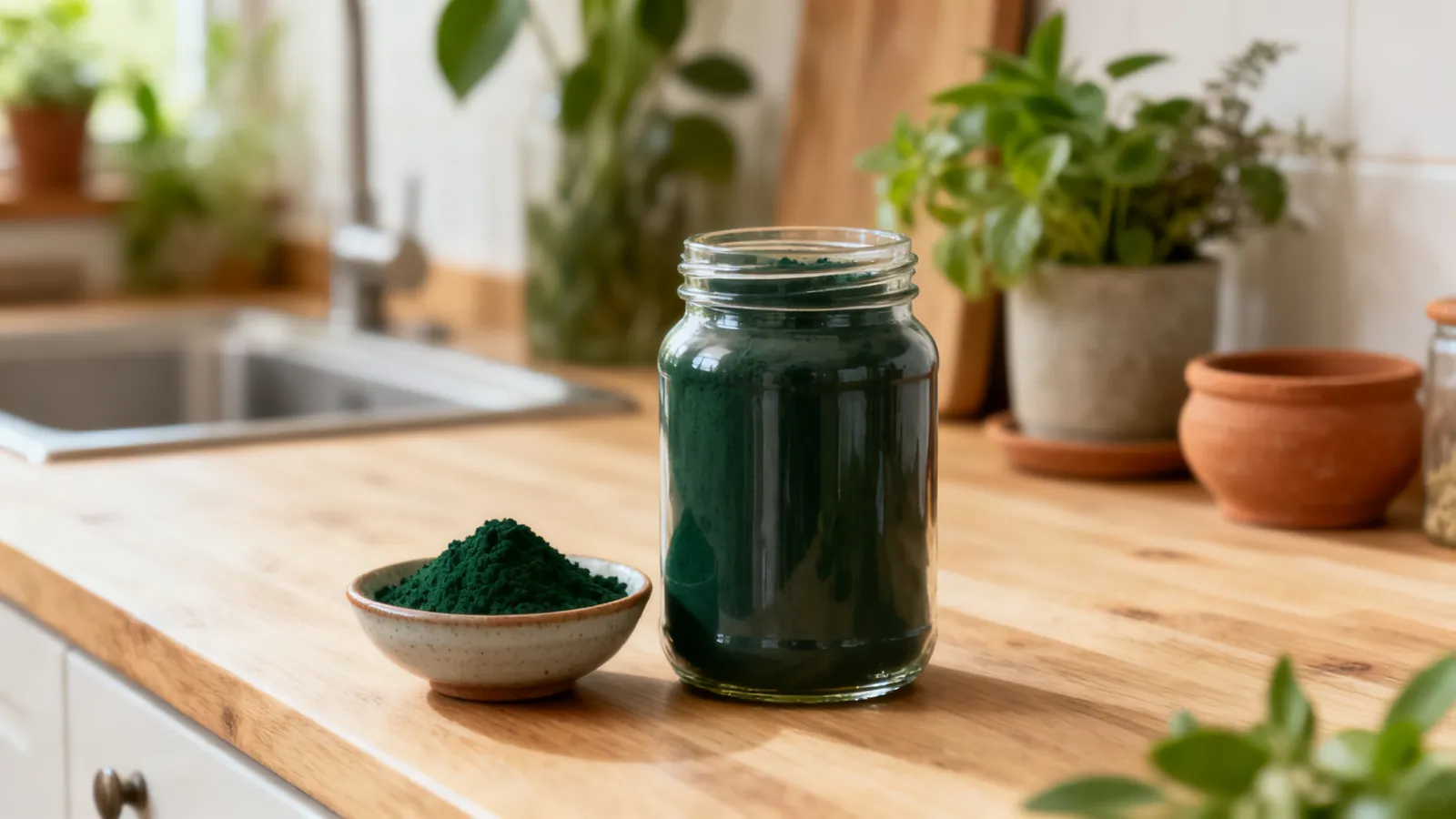
Chlorella is a single-celled freshwater green alga, about two to ten micrometres across, that has been eaten in parts of Asia for decades and sold as a powder, tablet or capsule in most health-food shops. It is often shelved next to spirulina, a different organism with a different cell wall, a different nutrient profile and a different set of cautions. The two are not interchangeable, and the labels do not always make the distinction clear.
What chlorella is and why the cell wall matters
Chlorella is a genus of green algae that grows in fresh water and ponds. It photosynthesises like a plant, which is why it is green, and it is rich in protein, B vitamins, iron and chlorophyll. The cell wall is made of tough cellulose and other fibres that human digestive enzymes cannot easily break down. For that reason, most chlorella sold for eating is labelled ‘broken cell wall’ or ‘cracked cell wall’, meaning the outer layer has been mechanically opened during processing. The broken form is the one used in most studies and the one that is better absorbed. Whole-cell chlorella is cheaper but harder to digest and less useful nutritionally.
Spirulina, by contrast, is a cyanobacterium, often called blue-green algae. Its cell wall is thin and made of soft material, so it does not need cracking. It is naturally higher in a blue pigment called phycocyanin and lower in chlorophyll than chlorella. The two are sometimes blended in green powders, but they behave differently in the body and carry different risks.
What the research shows, and how strong it is
Chlorella has been studied for cholesterol, blood pressure, blood sugar, immune markers and heavy-metal excretion. The evidence is early and mixed. Small trials and reviews suggest that chlorella may modestly lower total cholesterol and LDL cholesterol in some people, and may have a small effect on blood pressure, but the studies are short, often small, and use different doses and preparations. Results are not consistent enough to say chlorella prevents or treats any disease.
For blood sugar, a few small studies in people with prediabetes or type 2 diabetes have looked at chlorella alongside standard care, with some improvement in fasting glucose or insulin markers. The research is not strong enough to replace prescribed medication, and no one should stop or change diabetes treatment because they are taking chlorella.
Detox claims are the most overstated. Chlorella has been studied for binding heavy metals such as cadmium and lead in the gut, and some small trials in people with known exposure have shown increased excretion. That is not the same as ‘detoxing the body’ in the general sense. The human body clears most toxins through the liver and kidneys, and chlorella does not replace that. Claims that chlorella removes mercury from the brain or reverses poisoning are not supported by good evidence.
Spirulina has its own evidence base, mostly for cholesterol, allergic rhinitis and exercise performance, also early and mixed. Neither algae is a treatment for any condition.
How chlorella is used, and how much
Chlorella comes as powder, tablets and capsules. Powder is the cheapest per gram and can be stirred into water, juice, smoothies or soup. It has a strong grassy, slightly bitter taste and a deep green colour that turns drinks opaque. Tablets and capsules are easier to take but often contain fillers and are more expensive per gram of algae.
Studies have commonly used 1 to 10 grams a day of broken-cell-wall chlorella, divided into two or three doses with meals. Standard labels often suggest 3 to 5 grams a day. Starting at 1 gram a day and increasing slowly over a week or two is a common way to reduce digestive upset. Taking it with food helps. There is no standard timing; some people take it in the morning, others split it across meals.
Spirulina is usually taken at 1 to 3 grams a day in studies, sometimes up to 5 grams. It is often sold as dark green tablets or powder and has a milder, slightly salty taste than chlorella.
Quality, contamination and what to look for
Both chlorella and spirulina are grown in water, and water can contain heavy metals, microcystins (toxins from certain algae) and bacteria. Reputable producers test each batch for lead, cadmium, mercury, arsenic and microcystins, and publish certificates of analysis. Look for a product that states the species (Chlorella vulgaris or Chlorella pyrenoidosa for chlorella; Arthrospira platensis for spirulina), the country of origin, and that it is broken-cell-wall if it is chlorella. Organic certification is not a guarantee of low heavy metals, but it does restrict some growing conditions.
Avoid products that make sweeping detox or cure claims, do not list the species, or come in unlabelled bulk bags. Spirulina from certain regions has been linked to microcystin contamination, so source matters.
Side effects, interactions and who should avoid it
Chlorella is generally well tolerated. The most common side effects are gas, bloating, nausea, stomach cramps and loose stools, especially in the first days or at higher doses. Starting low and increasing slowly reduces these. Some people report allergic reactions, including rash, itching or breathing difficulty, particularly if they are allergic to other algae or have a history of atopy.
Chlorella is high in vitamin K, which helps blood clot. People taking warfarin or other vitamin K antagonists should not add chlorella without talking to their prescriber, because a sudden increase in vitamin K can change the international normalised ratio (INR) and affect clotting. The same caution applies to spirulina, though chlorella is the more concentrated source.
Chlorella also contains iodine, though the amount varies with growing conditions. People with thyroid disease, especially hyperthyroidism or autoimmune thyroid conditions, should be cautious and speak to a doctor before using it. Iodine can interfere with thyroid medication and with thyroid function tests.
Because chlorella may affect blood sugar and blood pressure, people taking diabetes or blood pressure medication should monitor for changes and not adjust medication on their own. Chlorella may also interact with immunosuppressants, though evidence is limited. Pregnant and breastfeeding women, and anyone with a medical condition or taking prescription medication, should talk to a doctor or pharmacist before starting chlorella or spirulina.
Common mistakes and what chlorella cannot do
A common mistake is buying whole-cell chlorella and expecting the same effects as broken-cell-wall chlorella. The whole-cell form is poorly digested and the nutrients are less available. Another is taking chlorella on an empty stomach in large doses, which increases the chance of nausea. Some people take chlorella with warfarin or thyroid medication without telling their doctor, which can be unsafe.
Chlorella is not a detox cure. It does not remove mercury from the brain, reverse liver damage, cure cancer, treat diabetes or replace a balanced diet. It is a concentrated source of some nutrients, but it is not a complete protein or a multivitamin. Spirulina is not a substitute for chlorella and vice versa; they have different nutrient profiles and different evidence bases. Neither should be used to stop or reduce prescribed medication.
Chlorella and spirulina side by side
| Feature | Chlorella | Spirulina | Who it does not suit |
|---|---|---|---|
| Organism | Green freshwater alga | Blue-green cyanobacterium | — |
| Cell wall | Tough cellulose; needs broken-cell-wall processing | Thin and soft; no cracking needed | — |
| Main pigments | Chlorophyll | Phycocyanin | — |
| Common forms | Powder, tablets, capsules | Powder, tablets, capsules | — |
| Amounts in studies | 1–10 g a day, divided | 1–3 g a day, sometimes up to 5 g | — |
| Vitamin K | High | Moderate | People on warfarin or similar blood thinners |
| Iodine | Variable, can be significant | Variable, usually lower | People with thyroid disease |
| Key cautions | May affect blood sugar, blood pressure; iodine; vitamin K | May affect blood sugar; possible microcystin contamination | Pregnant or breastfeeding women without medical advice; people on immunosuppressants |
| Evidence strength | Early, mixed, small trials | Early, mixed, small trials | — |
Choosing between them
The choice depends on what you are looking for and what you need to avoid. Chlorella is higher in chlorophyll and vitamin K, and is the one more often studied for heavy-metal binding. Spirulina is higher in phycocyanin and often milder in taste. Neither has strong evidence for treating any disease. If you take blood thinners, have thyroid disease, are pregnant or breastfeeding, or take medication for blood sugar or blood pressure, speak to a doctor or pharmacist before using either. For everyone else, a broken-cell-wall chlorella powder or a spirulina powder from a producer that tests for heavy metals and microcystins is a reasonable starting point, taken with food at a low dose and increased slowly.
Common questions
What is chlorella good for?
Chlorella has been studied for cholesterol, blood pressure, blood sugar and heavy-metal excretion, but the evidence is early and mixed. It is a source of protein, B vitamins, iron and chlorophyll, but it is not a treatment for any disease. Most people use it as a green powder added to drinks or as a tablet.
Is chlorella the same as spirulina?
No. Chlorella is a green freshwater alga with a tough cell wall that must be broken for digestion. Spirulina is a blue-green cyanobacterium with a soft cell wall. They have different pigments, nutrient profiles and cautions, and they are not interchangeable.
Does chlorella really detox heavy metals?
Some small trials suggest chlorella may increase the excretion of certain heavy metals like cadmium and lead, but this is not the same as general detoxing. The body clears most toxins through the liver and kidneys. Claims that chlorella removes mercury from the brain or reverses poisoning are not supported by good evidence.
Who should not take chlorella?
People taking warfarin or similar blood thinners should avoid chlorella because of its vitamin K content. People with thyroid disease should be cautious because of iodine. Pregnant or breastfeeding women, and anyone on medication for blood sugar or blood pressure, should talk to a doctor or pharmacist first.
How much chlorella should I take?
Studies have commonly used 1 to 10 grams a day of broken-cell-wall chlorella, divided into two or three doses with meals. Standard labels often suggest 3 to 5 grams a day. Starting at 1 gram and increasing slowly over a week or two can reduce digestive side effects.
Read next

Acai Berry: Nutrition, Bowls and Weight Loss Claims
Acai berry explained: what the fruit contains, how it is sold as puree or powder, what research suggests, the sugar in bowls, and who should avoid it.
Greens Powders: What's Inside and Who They Suit
Greens powders blend grasses, algae and vegetable powders. Learn what the research says, how to read a label, and who should avoid them.
Goji Berry: Benefits, Uses and Who Should Avoid It
A calm reference on goji berries: what dried goji contains, how they are eaten, what eye-health research suggests, and the warfarin and nightshade cautions.